


Vision & Mission
Vision is to recognize as a department with quality education and innovative research. As the years rolled on, the Department continued to uphold its legacy of excellence, inspiring future generations of scientists to explore the fascinating realm of microorganisms and their impact on life.
Academic Curriculum
| Course | Duration | Qualification & Eligibility | Age | Seats |
|---|---|---|---|---|
| B.Sc (Hon’s) With research (NEP) | 4 years | (10+2 with 3 science subjects (PCB or any other science subjects) with 50% (SC/ST 45%) marks) – Direct admission at SILB Student on exit will be awarded certificate in Microbiology after securing 42 credits in Semester I and Semester II. Student on exit will be awarded diploma in Microbiology after securing 84 credits in Semester III and Semester IV. Student on exit will be awarded Bachelor in Microbiology after securing 124 credits in Semester Vand Semester VI. Student on exit will be awarded bachelor in Microbiology (Hon’s withResearch) after securing 164 credits Not more than 22 years 30 after completion of Semester VIII. | Not more than 22 years | 30 |
| M.Sc | 4 semesters(One semester totally dedicated to research) | A Bachelor Degree under 10+2+3 pattern of education in Science with any of the subjects i.e.Microbiology, Biochemistry, Biotechnology, Genetics, Chemistry, Molecular Biology, Botany or Zoology or M.B.B.S./B.V.Sc from any Institute/University recognized by the Himachal Pradesh University, Shimla/University Grant Commission, New Delhi with at least 50% marks for general and other category and 45% for SC/ST category candidates as per HPU rules. Eligibility : Entrance test from HPU | Male:Not more than 26 yrs. Female:Not more than 28 yrs.SC/ST: Not more than 29yrs. | 40 |
Fee Structure
| Course | Semester Fee | Security Fee (Refundable) | Admission cum Registration Fee (One-time) |
|---|---|---|---|
| B.Sc | 30,500 | 10,000 | ₹ 2,500 |
| M.Sc | 47,500 | 12,000 | ₹ 2,500 |
Special Features
Internship
Internship is included as a part of the Academic Curriculum. Students are required to undergo a 2–4 week Internship in external Industries, Research Institutes, or Medical Institutions to gain practical exposure.
Training Programme
Department of Microbiology offers 3-week and 6-week training programmes for 12th pass students and UG students to enhance their practical skills.
FAQs – Microbiology
Microbiology is the study of microscopic organisms such as bacteria, viruses, fungi, and protozoa that are not visible to the naked eye.
The main branches include:
- Bacteriology – study of bacteria
- Virology – study of viruses
- Mycology – study of fungi
- Parasitology – study of parasites
- Immunology – study of the immune system
Students should have:
- Basic knowledge of biology and chemistry
- Laboratory skills
- Observation and analytical thinking
- Attention to detail and patience
Microbiology graduates can work in:
- Research laboratories
- Pharmaceuticals, Food, Biotech and Dairy Industries
- Hospitals and diagnostic labs
- Environmental and Agricultural sectors
Yes, microbiology plays a crucial role in:
- Disease prevention and treatment
- Food production (like curd, cheese, fermentation)
- Environmental sustainability
- Biotechnology and vaccine development

Dr Divya Tandon, PhD, ARS NET
Head of Department
Experience: 10 Years | Specialization: Industrial Microbiology | Publications: 25+ Research Papers (National & International Journals)
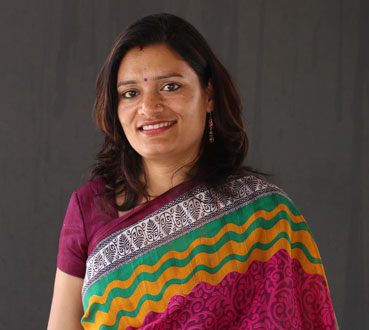
Dr. Mamta Devi Sharma, MSc, BEd, SLET, ARS NET, PhD
Assistant Professor
Experience: 17 Years | Specialization: Food Microbiology | Publications: More than 20 research papers in reputed National and International Journals.
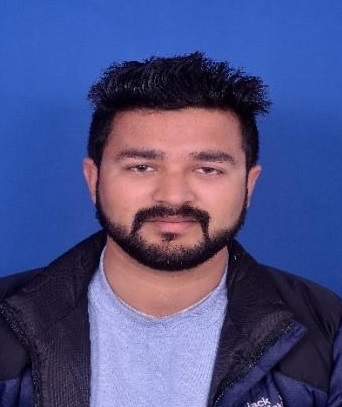
Dr Gaurav Sharma, PhD
Assistant Professor
Experience: 4 Years | Specialization: Agricultural & Soil Microbiology | Publications: : More than 25 research paper in reputed National and International Journals.